10 Facts About Robot Vacuums With Lidar That Will Instantly Put You In A Good Mood
Lidar Navigation for Robot Vacuums Robot vacuums range from $200 to $4,000. They're a great investment for busy individuals and households that are cluttered. Many of them offer appealing upgrades, such as self-emptying bins, as well as mopping functions built-in. Advanced models incorporate sensors for navigation, mapping, and other functions. Certain models come with cameras and gyroscopes to provide additional precision. LiDAR Lidar is a laser-based technology that measures distances by using light beams. It is utilized in self-driving cars and aerospace, but it also helps robot vacuums find obstacles they may not be able with cameras or other sensors. The technology sends out laser light beams that bounce off objects and then return to the sensor, creating maps of the space with specific information about the dimensions and shape of these objects and their positions. This can help robot vacuums avoid hitting walls, furniture legs and other obstructions that can damage them or block their suction motors. It also provides an accurate view of the space, which allows them to create a clear path through rooms and to ensure that no area is not missed. Certain models can draw the entire layout of your home, making it easier to set up and lessen the need for extensive programming or manual navigation. Of course, the benefits of lidar are limited by a robot's ability to discern between an obstacle from simply dirt. This can be frustrating particularly with older models. They could get stuck on piles of dog poop or get caught in phone cords and socks. The top robot vacuums that have lidar are equipped with sophisticated obstacle avoidance systems, which make use of cameras and lidar to navigate. These vacuums are able identify the feces of pets and can also navigate through phone cords and socks. Look for models that have smart mapping that allows users to create virtual no-go zones. They can also be easily installed using Alexa, Google Assistant, or the smartphone app. If you need to remove pet hair or other messes regularly, consider a robotic vacuum cleaner that also mop. These can be programmed to clean and dry their mop tanks that oscillate in a certain pattern, eliminating the need to manually empty the tank following each cleaning. A multi-tasking robotic with all the bells will cost more however you'll save lots of time and effort throughout the year. Gyroscopes Lidar navigation, which was initially employed in self-driving vehicles, is now available for robot vacuums. Lidar scans the surrounding area using lasers, measuring the time taken for each light beam to bounce off an object and return to the sensor. This information is used for creating a 3D room map and to detect obstacles. This is a crucial aspect, as robot vacuums can be tiny and get stuck on furniture legs, cords or toys. Without this technology, the robot may be forced to reverse or make multiple passes across the same area, which can waste time and energy. With a 3D map, the robot is able to quickly locate a different way to avoid getting stuck. The majority of robot vacuums utilize sensors or cameras to detect obstacles and objects, but some combine both technologies to produce the best results. The Roborock S7 MaxV combines 3D mapping cameras and lidar to provide better floor mapping and precise obstacle detection. This helps the robot navigate more efficiently around obstacles and enhances its ability to clean corners and under furniture. The S7 MaxV also has gyroscopes which aid in maintaining stability while cleaning. This is particularly useful when dealing with slippery or uneven floors. This will also stop the robot from drifting off its original path or missing spots. The ECOVACS DEEBOT T20 OMNI is another robot that offers excellent mapping and navigation thanks to its lidar and 3D-mapping sensors. It can quickly identify different types of flooring, and clean them according their specific needs. It can even detect dirt trapped between rugs and carpets. With its suction power, DEEBOT T20 OMNI will eliminate allergens and pet hairs. Like the Roborock Q Revo, this robot can sweep and mop your floors on demand or on a schedule. It also recognizes high-traffic areas and clean them on a regular basis. The model is multifunctional. best budget lidar robot vacuum , intelligent swiveling, mopping and digital keep-out zones. It does not have the intelligent obstacles avoiding capabilities of its rivals which cost more than $1,000 and a stray sock or cable can cause a problem for the clean. SLAM One of the biggest obstacles to smart robotics is that the majority of machines require maps to navigate. SLAM, which stands for simultaneous localization and mapping, is an algorithm that lets robots autonomously generate this map while moving around in a new setting. Contrary to 3D-mapping cameras that use light to detect objects, lidar sensors shoot laser beams that bounce off surfaces and then return to the sensor, providing real-time distance measurements for maps of the floor. This enables robots to detect and avoid obstacles even in low light conditions. SLAM, when combined with gyroscopes and other sensors, can assist robots create a precise model of their environment. This will help them locate themselves within a space and make decisions about which areas to move in and which areas to clean. Without SLAM robots move randomly and may miss furniture, other objects, or run out power due to excessive motor usage. If you are looking for a robot that uses SLAM technology, make sure the sensor is free of debris or dust to ensure it is functioning correctly. Also, you should read the manual of the robot's user for solutions to problems and suggestions for troubleshooting or contact customer service if you have questions or concerns. While budget models such as our top pick for the most effective robot vacuum on Amazon use a random bump-and move form of navigation advanced robots combine data from multiple sensors to create an interactive map of their environments and make smart navigation decisions about how to move and where to clean. This could result in an easier cleaning process with fewer missed areas. As we've tested a wide range of robots, we've found that the most accurate and efficient ones use lidar and camera-guided navigation, with 3D-mapping cameras and AI obstacle avoidance smarts. This allows robots to plan their movements more precisely. They don't have to spend time wandering around a room, or getting stuck on a remote or toy. The iRobot Roomba j7 is the current top of the line in this area and is a accurate mapping and user-friendly application that is constantly improving and evolving. Sensors Optical A robot vacuum can be an investment worth considering for households that struggle to keep up with dust, pet hair and dirt. Even the most powerful robotic vacuum cleaners cannot reach every corner, and are not a substitute for an upright stick, canister or. If you are looking for a model that can keep up with the accumulation of dust and debris, choose one that has the most recent smart mapping technology and object and obstruction detection capabilities. Lidar-guided navigation assists robots to find their ways around furniture, avoid getting caught up with cords and other things, and finish cleaning faster. Other options to consider include scheduling remote control operation, scheduling voice assistant integration. The majority of robot vacuums allow you to create cleaning schedules and set up rooms for automatic or manual cleans However, those that have more advanced technology allow you to control the robot via your smartphone, tablet or smart speaker. You'll also want to consider how much time you're willing for emptying the vacuum's dustbin and preparing the room prior to every cleaning session. The robot vacuums we have reviewed can navigate the home with no issues However, some require more time to complete a task. Find one that has an estimated cleaning time of 60 minutes or more to ensure that it doesn't run out of battery energy before complete the task. 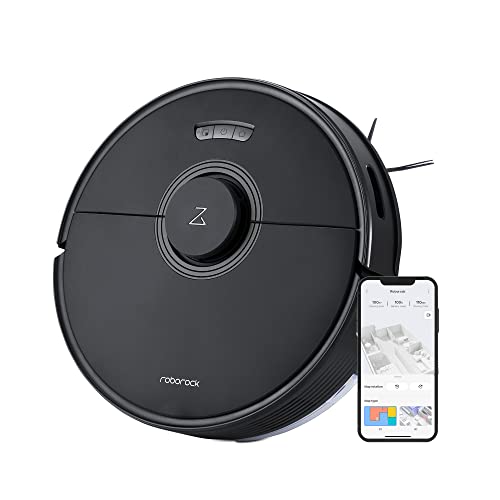 Some models offer dual navigation, which uses lidar and gyroscopes in order to map the house and guarantee accurate cleaning. This is an excellent option for homes with multiple rooms and large flooring, as it can reduce how many times the robot has to restart. Consider how often your pets shed and if they are likely to cause mess in your home. Look for a model that's pet-friendly, since it will be less likely to be clogged with dander or fur. It's worth upgrading your robot to one with 3D-mapping and object recognition for cleaner and more efficient. The Roborock S7 MaxV is a good example as it offers both technologies and lets you to set virtual “no-go” zones that the robot will stay away from and stop it from slipping over wires or getting stuck on rogue socks and shoes.